Followers |ලිපි පල කළ සැණින් දැනුවත් වන්න !

Monday, October 31, 2011

නීරක්තිය සහ ලුණු "ද්විත්ව සබලීකරණය" | Aneamia and Salt "Double fortification"


නීරක්තිය, ශ්‍රී ලංකාවේ පෝෂණ ක්ෂේත්‍රයේ තවමත් විසඳුමක් නොමැති දැවෙන ප්‍රශ්නයක් ලෙස පවතිනවා.

සමස්ථයක් ලෙස ගත් විට නීරක්තිය ජනගහනයෙන් 20-40% දක්වා ප්‍රමාණයකට පවතිනවා. මෙම තත්වය වතු ආශ්‍රිත ජනයා අතරත් කුඩා දරුවන් අතරත් බහුලයි.තේ වගා කෙරෙන සමහර දිස්ත්‍රික්ක වල කුඩා ලමුන් අතර නීරක්තිය 40% වැනි ඉහල අගයයන් පවා වාර්තා වී තිබෙනවා.මෙයට එක් හේතුවක් ලෙස එම ප්‍රදේශ වල බහුලව පවතින පණු රෝග හේතු වන බව කිව හැකියි.
 නීරක්තිය නිසා හුස්ම ගැනීමට මෙන්ම, ඇඟ වෙහෙසා වැඩ කිරීමේ අපහසුතා ඇති වෙනවා.මෙනිසා රටක ශ්‍රම බලකායේ කාර්යක්ෂමතාව අඩුවී ආර්ථිකය පරිහානියට පත්වීම සිදුවෙනවා. නීරක්තිය නිසා ගැබිනි මව්වරුන්ට අඩුබර දරුවන් ලැබීමෙන් පසු කාලීනව එම දරුවන් විවිධ බෝ නොවන රෝග වලට ලක් වෙනවා. වඩාත්ම අහිතකර ප්‍රතිඵලය වන්නේ වැඩෙන දරුවන් නීරක්තියට ලක්වීමෙන් ඔවුන්ගේ බුද්ධි මට්ටම හීන වීමයි ,මෙවිට දරුවාට ඉගෙනීමට ඇති තම සහජ දක්ෂතාව දැක්වීමට නොහැකි වීම සිදු වෙනවා.

සමහර රුධිරගත රෝග ආදිය හැරුණු කොට, ලංකාවේ නීරක්තියට හේතුව යකඩ ඌනතාවයයි. සියළුම ගර්භණී මව්වරුන්, කිරි දෙන මව්වරු, සමහර ප්‍රාථමික ශ්‍රේණිවල පාසැල් සිසුන් හා සියළුම නොමේරූ දරු උපත් වලට මෙන්ම යකඩ ඌනතාවය විනිශ්චය කළ සියල්ලන්ටම, යකඩ ප්‍රතිකාරයද, ඉහත සමහර කාණ්ඩ වලට ඊට අමතරව පණු ප්‍රතිකාරද, ත්‍රිපෝෂ ද සෞඛ්‍ය අංශ විසින් ලබා දෙනවා. ඉහත ක්‍රියාමාර්ග සියල්ලම තිබුනත් මෙතරම් ප්‍රතිශතයක් නීරක්තියෙන් පෙළෙන්න්නේ ඇයි? ද යන්න අප හමුවේ ඇති ගැටළුවක්.

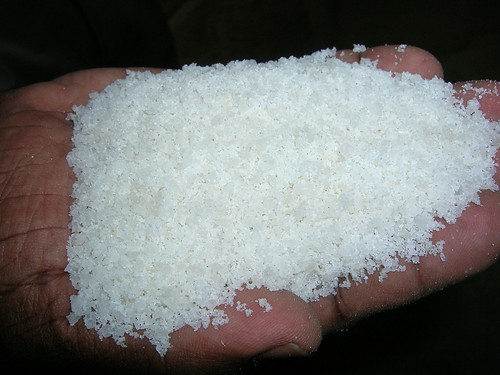
නීරක්තිය මෙතරම් ම බහුල සෞඛ්‍ය ගැටළුවක් වන හෙයින් ද, එමගින් එක් එක් පුද්ගලයාට මෙන්ම රටේ ප්‍රගමනයට ද වන හානිය සලකා බලා ,සියල්ලන්ටම ප්‍රමාණවත් පරිදි දෛනික යකඩ ප්‍රමාණයක් ලබා දීමට පියවර ගත යුතු තත්වයක් උදා වී තිබෙනවා. මෙහිදී, එදිනෙදා ආහාරයට ගන්නා තිරිඟු පිටි හෝ ලුණු වැනි පාරිභෝගික භාණ්ඩයක් යකඩ වලින් සබලීකෘත(fortify) කිරීම ලෝකයේ බහුලව භාවිතා වන ක්‍රමයක් වනවා; ලාංකිකයන්ගේ තිරිඟු පිටි පරිභෝජනය අඩු කරලීමේ ක්‍රියාදාමයක අප නිරත වී සිටින බැවිනුත්, ලුණු අයඩින් වලින් සබලීකරණය කිරීමෙන් "අයඩින් ඌනතා ගලගණ්ඩය" තුරන් කිරීම වැනි අප ලබා ඇති සාර්ථක අත්දැකීම් ආදියත් සළකා,ලුණු යකඩ වලින් සබලීකෘත කිරීම ශ්‍රී ලංකාවට උචිත ක්‍රියාමාර්ගයක් ලෙස තෝරගන්නා ලදී.


මේ අනුව ලුණු දැනටමත් සිදු කෙරෙන පරිදි "අයඩින්" වලින්ද, අලුතෙන් "යකඩ" වලින්ද, "ද්විත්ව සබලීකරණයකට" ලක් වෙනවා. දැනට මෙසේ ලුණු වලට යකඩ එක් කල හැකි යන්ත්‍ර හම්බන්තොට ලුණු ලේවායේ පවතිනවා.

මෙම ලුණු "ද්විත්ව සබලීකරණය" හඳුවාදීමට පෙර, පූර්ව පර්යේෂණ කටයුතු  දැනට අප ආයතනය මගින් ගම්පහ දිස්ත්‍රික්කයේ තෝරාගත් ප්‍රදේශවල සිදු කෙරෙමින් පවතිනවා. එහි ප්‍රතිපල නුදුරේදී ම දැන ගැනීමට හැකියි.


ලිව්වේ -වෛද්‍ය වේදිෂ ගන්කන්ද
උපදෙස්- වෛද්‍ය රේණුකා ජයතිස්ස

පින්තූර-greenstone.org

Thursday, October 27, 2011

The Truth about Tea | තේ පානය


“Tea is the most common consumed drink in the world after water with a per capita worldwide consumption of around 0.12 litre per year”


Black, oolong, green and white tea are all an agricultural product from the leaves of Camellia sinesis. The differences in colour and taste are related to processing methods. Tea has been consumed over centuries around the world and has health benefits along with potential drawbacks, some of which are highlighted below. 

Potential Benefits
Tea contains one of the highest contents of flavanoids and catechins (a group of flavanoids), which are types of antioxidants. Many studies have shown positive health effects of drinking tea. An explanation to this includes the high levels of flavonoids that protect cells and tissues in the body from oxidative damage by scavenging oxygen-free radicals. Many human intervention studies with green tea and black tea have shown a significant increase in plasma antioxidant capacity in humans about 1 hour after consumption of tea.

Potential Drawbacks
However, tea contains a substance called oxalate, whereby an overconsumption leads to binding with free calcium in the body. Extreme overconsumption can eventually cause kidney stones. Tea also contains tannin, which is an astringent, bitter polyphenolic compound. High amounts of tannins decrease the efficiency in converting the absorbed nutrients into the body, such as iron; which can lead to anemia. There is also a small amount of caffeine (form of an addictive drug) in tea and an overuse can lead to side effects, such as sleep disorders.

In Sri Lanka, tea is consumed at least 3-4 cups a day, at home or from shops. The longer tea is brewed or the more tealeaves are re-used, the higher the build up of tannins. Drinking tea with a high content on tannins with meals can lead to iron deficiency.

Green Tea
Green tea has been consumed for over centuries and even used as Chinese medicine. It is a non-fermented tea, which contains more catechins compared to black tea. Its extract has shows to lower LDL cholesterol (risk factor for heat disease and diabetes), has an anti-hypertensive effect, body weight control and other physiological functions.
Recommendations:

§  Drink black/green tea 2 hours prior or post a main meal (i.e. breakfast, lunch, dinner), as to not decrease your iron stores.
§  Do not re-use your tealeaves more than once as it builds up tannins. Instead, you can use the used up tealeaves as compost for your plants as it is rich in nutrients.
§  Do not brew your tea for longer than 1 minute, as the longer you brew (i.e. the darker your tea), the more tannins build up.
§  Adding citrus, such as lime juice to your green tea can lower the pH in the small intestine, thus causing more catechins to be absorbed.
§  Do not rely solely on green tea/black tea in helping you to reduce weight or better your health status, instead combine the occasional cup of tea with regular exercise and a healthy diet.

References:
Graham HN. Green tea composition, consumption and polyphenol chemistry. Preventive medicine. 1992; 21(3): 334-350 
King-Thom C, Tit Yee W, Cheng-I W, Yao-Wne H, Yuan L. Tannins and human health: a review. Critical Reviews in Food Science and Nutrition.1998: 38(6) 421-464.


Information by Dr. Renuka Jayatissa

Friday, October 21, 2011

Manioc can be harmful! | මඤ්ඤොක්කා වැඩිපුර කන්නේ බලාගෙනයි!


Until recently, manioc (cassava) has been in the lime light as a food with anti-cancerous properties due to the availability of ‘vitamin B17’.

We inquired about this from the World Health Organisation (WHO) headquarters, Geneva. The WHO Joint Secretary to JECFA and JMPR replied that the Joint FAO/WHO expert committee on Food Additives (JECFA) had recently assessed the toxic nature of cyanogenic glycosides. They confirmed that ‘vitamin B17’ is not in fact a vitamin.

The following information on manioc is provided for three reasons:

1. Cyanogenic glycoside
Manioc contains a cyanogenic glycoside called linamarin, a compound related to amygdalin. ‘Vitamin B17’ falls under the compound called amygdalin, which occurs naturally in plants. However, amygdalin belongs to the group of compounds known as ‘cyanogenic glycosides’, which contains cyanide (toxic compound which can have a negative effect on the central nervous system) that can be released upon digestion in the human body, which can even be a source of intoxication.

2. High glycemic index (GI)
Studies have shown that manioc has a very high GI of around 94, compared with white bread (reference food). High GI food rapidly raises blood glucose, which leads to you being hungry faster. Comparatively, low GI food releases glucose more slowly and steadily, which is more favourable as you feel full for longer. 

3. Low protein
Manioc has a minimum amount of protein available, so consuming a meal with only manioc can lead to “protein-calorie malnutrition”. This is where inadequate amount of protein in the diet can lead to malnutrition. This form of malnutrition can eventually lead to kwashiorkor and marasmus in children.

However, it is ok to consume manioc as a curry as a part of your main meal on occasion.

Below is the letter sent by WHO for your information:

"The so-called 'vitamin B17' is in fact no vitamin, it is a compound called amygdalin that occurs naturally in certain plants. I understand that this has been promoted as cancer treatment, however this is totally non-scientific and there seems to be no evidence of effectiveness. To the contrary, amygdalin belongs to the group on compounds called 'cyanogenic glycosides' which contain cyanide that can be liberated when digested in the human body, and can even be a source of intoxication.
Cassava also contains a cyanogenic glycoside called linamarin, a compound related to amygdalin.
The Joint FAO/WHO Expert Committee on Food Additives (JECFA) has just recently evaluated the toxicity of cyanogenic glycosides, and the summary report is accessible on the web: http://www.who.int/foodsafety/chem/jecfa/summaries/Summary74.pdf . The full report and detailed monographs are in preparation and will be published by the end of this year."


For the Sinhalese version of this article Click Here | මෙම ලිපියේ සිංහල පරිවර්තනය සඳහා මෙතැනට යන්න.

Image courtesy of http://www.erroluys.com/Kindle/KindleIllustratedGuide.htm

Wednesday, October 19, 2011

"Trans fatty acid" the killer |"ට්‍රාන්ස් ෆැටි ඇසිඩ්" මරුවා ගැන දැනගන්න

As you know, fat and lipids are composed of two major types of fatty acids: saturated and unsaturated fatty acid. Trans fatty acids (TFA) is a part of the unsaturated fatty acid group.  TFA is a major health risk and has been known to cause heart attacks, increase LDL, decrease HDL cholesterol (see our article on PUFA) and has carcinogenic effects.

Generally, most food industries do not use saturated fatty acids (SAFA) in their products as it gets rancid faster. Instead, they use hydrogenated vegetable oil (unsaturated fatty acids). During this process of hydrogenation addition of hydrogen atoms to unsaturated fats occurs, which eliminates double bonds, thus making them into complete saturated fats. However, some fatty acids may still remain as partially saturated fatty acids. Partial hydrogenation converts cis-isomers into trans isomers; hence fatty acids (TFA). Products that have been deep fried and baked, such as potato chips and biscuits, are high in TFA. This is important because, the Sri Lankan population consumes high amounts of biscuits daily. 
Always check food labels to see the amount of TFA
Due to these reasons, most countries have legislation to label food products that contain TFA. In the present day, there is a higher demand for “trans-fat free” products in the market, as people are becoming more interested in healthy diets. 

Recently, Japanese researchers examined the TFA levels in the umbilical cords and placenta of newborn babies. It was found that Sri Lankan babies had higher levels of TFA levels than Japanese babies. This could be one of the reasons of high low birth weight (LBW) rates in Sri Lanka. LBW can predispose NCD’s (non communicable diseases) in later life. 

Majority of households tend to re-use deep-frying oil again and again, which is not recommended; as it can cause TFA in food. It is highly recommended to change the oil after each time. If your household does re-use oil, it is suggested to use coconut oilMany "popular" fast food outlets and restaurants re-use their deep frying oil by straining debris from their oil to make their products. This is an extremely poor practice, which makes the fast food you eat full of TFA.
Say NO to trans fat!
For the Sinhalese version of this article Click Here | මෙම ලිපියේ සිංහල පරිවර්තනය සඳහා මෙතැනට යන්න.

Images courtesy of www.cleveleader.com, pickyeaterblog.com

Tuesday, October 18, 2011

Osteoporosis | ඔස්ටියොපොරෝසිස්


World Osteoporosis day is due on 20th of October, this fact sheet is meant to commemorate this event,  


 Osteoporosis means loss of bone materials and weakening of its structure causing fractures. The disease is commonly seen in older women and men. In addition to fractures, osteoporosis leads to bending of spine resulting backache, gradual shortening of standing height and abnormal standing posture. Osteoporosis is no longer considered an inevitable part of aging; it is recognized, now, a disease affecting only some men and women.

In the entire world, there are 200 million women suffering from osteoporosis while Europe, Japan and USA, together, have 75 million women affected. In general, every third women over 60-70 years have osteoporosis and over 80 years, 2/3 women are likely to have the disease.

Fracture is the most dangerous complication of osteoporosis. While fractures could occur at any site, spine, hip and wrist fractures are the common sites affected in osteoporosis. Of these, hip fracture has major health concerns. Hip fracture is associated with high mortality (risk of death) and morbidity (risk of being not well) and nearly 50% of patients need help for their daily normal activities (like walking, going to washroom), one year after the fracture.

Worldwide, there were 1.6 million hip fractures in 1990 and this number is expected to reach 6.26 million in 2050. Most of these hip fractures are expected to occur in countries in Asia and South America. In Sri Lanka, there were 2700 hip fractures in 2006 and this figure is expected to reach 7000 in 2040.

Prevention of fractures includes two aspects.
(1) Promoting stronger bones in general
2) Treating people who are likely to develop a fracture

Sufficient protein intake during growing period is essential for children. An adequate intake of calcium and vitamin D should be ensured. There are numerous inexpensive sources of calcium in traditional Sri Lankan diet. While small fish add high calcium and vitamin D to the diet, green leaves are an inexpensive source of calcium available in the entire country right round the year.

In addition to nutrition, physical activities during childhood will ensure stronger bones. Exercise needs to be continued throughout the entire life to get the maximum benefits. While high impact physical activities such as jumping and skipping are the most beneficial activities for young, brisk walking, running and jogging can be recommended for middle age people. Elderly need to consult their doctor before engaging in new physical activity programs.

In conclusion, osteoporosis is no longer considered an inevitable effect of ageing. Proper nutrition and physical activities help to maintain optimum bone health regardless of age. There are proven drugs to treat patients who have a high chance for fracture.


Prepared by Osteoporosis, Sri Lanka for Osteoporosis Day 2011